Alexander Rothman illustrates how one can go about reading comics poetry by proposing questions like "What are the effects of these choices and their repetition?" under some of the examples he gave; we must be aware of the "visual choices" of these works as we would be with any other works of art. Knowing this makes me think of Chris Ware as a true pioneer of this form of work. Chris Ware brought his bountiful knowledge of visual arts into his comics; when creating them he asked questions like "When you have all the tools of visual arts at your disposal, then why put words in balloons?". Ware also choses to avoid using perspective in his comics because to him it doesn't "effectively translates the way we remember physical space into the two-dimensional form of comics" (from an interview with The Paris Review). The introduction to this form of work really reinforces how important it is for us to stray from our habit to quickly consume information around us like we were shaped to but instead slow down and really try to understand works of art and as Rothman puts, "walk a mile or two in someone else's brain."
Showing posts with label Readings. Show all posts
Showing posts with label Readings. Show all posts
Saturday, November 5, 2016
Response to "What is Comics Poetry"
In this essay, Alexander Rothman gave me a pretty good idea of what comics poetry is. I have become more conscious of this form of work recently and have also began to see it manifest more and more around me; I've also noticed that this form of work has always intrigued me subconsciously but I never really knew how to approach it. My understanding is that poetry and comics are difficult to comprise on their own; this new form combines both mediums and I now realize how they can seem simple at a glance but are actually "exceptionally difficult" as Rothman stated. Now that I am recalling my encounters with comics poetry, the first thing that comes to my mind is Ida Applebroog's artists' books. I deeply appreciate the exposure to Ida Applebroog's books towards the beginning of WARP because I think it was one of those things that really helped me push my ability to be aware of this "subjective bridging" that occurs in art.

Wednesday, October 26, 2016
Research of Images for List on Board
*Buckminster Fuller: an American architect, worked from late 1920s to 70s.
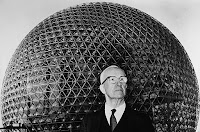
* Ha-has: Can be found in formal gardens, grounds of grand estates.

*Parco dei Mostri: Located in Bomarzo in the province of Viterbo, in Northern Lazio, Italy. Created during the 16th century.
 *Roman Forum: Originally a market place in Ancient Rome, built by multiple emperors(from emperor Julian to Trajan), Started being built in 29 BC.
 *Boboli Gardens: Located in Florence, Italy. It's construction began in 18th century.

*Jardin du Luxembourg: Located in Paris, France and built in 1612 as a commission for Marie de' Medici.

*Tivoli Garden or Villa de'Este: An Italian Renaissance garden in Tivoli, Italy, made during the 16th century.

*Bernini's Four Rivers: Designed in 1651 by Bernini and Pope Innocent X. This fountain is located in Piazza Navona, Roma, Italy.

* Jean Dubuffet's Jardin d'E maille: Made in 1974 and is currently in the Rijksmuseum, Netherlands.
 *Stowe Garden: An 18th century garden located in Stowe, Buckinghamshire, England.
 *Stourhead Garden: An 18th century garden located in Mere, Wiltshire, England.
 * Lincoln Memorial: This national monument is located in the National Mall, Washington D.C and was in construction from 1914 to 1922.
 *Viscaya Museum: Named after early Spaniard " Bel Viscera". This villa belonged to James Deering, a business man, and served as his winter residence. It was in construction from 1914 to 1923.
 *Fairchild Tropical Gardens: Established in 1936 by Robert H. Montgomery. He named the garden after his friend, David Fairchild ( who retired in Miami).


* Ha-has: Can be found in formal gardens, grounds of grand estates.

*Parco dei Mostri: Located in Bomarzo in the province of Viterbo, in Northern Lazio, Italy. Created during the 16th century.


Sunday, October 23, 2016
Response to “Green Dreams”
This text is laden with historical references and allusions; I found myself having to look up a lot of what Harbison was referring to as I tried to decipher the reading. All of the extra research was tedious but I was determined to get as much as I can out of the reading and I actually found the new bits of knowledge to be rather rewarding. I've learned that a garden can carry a powerful monologue, it can be an intellectual space that can possess a plethora of symbolism.
Two things really stuck to me from this passage: Harbison's allusion to Piranesi and Raphael's artwork in context with this "garden" topic. I've actually never heard of Piranesi before and discovering his work through this text was a real treat. There is a certain atmosphere that Piranesi manages to create in each of his elaborately rendered etchings and I can't stop studying the details in them ( I can see MC Escher possible drawing inspiration from Piranesi's Imaginary Prisons.) The comparison between the Stourhead temple and the one in Raphael's Marriage of the Virgin helped me understand how a building can bring "higher meanings" to their surroundings, in this case, a Renaissance painting and an English garden.
Two things really stuck to me from this passage: Harbison's allusion to Piranesi and Raphael's artwork in context with this "garden" topic. I've actually never heard of Piranesi before and discovering his work through this text was a real treat. There is a certain atmosphere that Piranesi manages to create in each of his elaborately rendered etchings and I can't stop studying the details in them ( I can see MC Escher possible drawing inspiration from Piranesi's Imaginary Prisons.) The comparison between the Stourhead temple and the one in Raphael's Marriage of the Virgin helped me understand how a building can bring "higher meanings" to their surroundings, in this case, a Renaissance painting and an English garden.
 |
| Carceri d'invenzione or Imaginary Prisons Piranesi |
 |
| Marriage of the Virgin Raphael |
 |
| Temple of Apollo, Stourhead |
Sunday, October 2, 2016
Response to "Photographing the Past During the Present"
Like the end of the reading stated, both Edward Curtis and Richard Throssel created work that "invites contemporary audiences to interrogate the past and the people who documented it with a more critical eye". This reading enlightened me on the fact that there were Native American photographers at that time. After reading this chapter of Lampert's book, I came to admire Richard Throssel for utilizing the new medium of photography to address problems in his community; Throssel's work is admirable in that it accurately captures the lives of Native Americans. Although Curtis's work did leave an "extensive record of Native peoples", I still can't get over the unpalatable fact that he took a selfish approach and left damaging stereotypes on the Native people.
During a time where many were curious about the lives of Native Americans, Edward S. Curtis capitalized on the chance to portray Natives through his own lens and sell these images to "wealthy clientele". It's one thing for Curtis to be curious, then document and "create a reality for himself" but it's another thing to intentionally utilize a whole group of people to create visual propaganda, altering their reality for a large audience and then leave them to deal with the negative stereotypes that remained. Richard Throssel's work served as "a form of community activism" and he was genuinely dedicated to helping his people through the photography medium, with their permission. It's a shame that Throssel's work wasn't given as much public recognition as Curtis' work; I think if it had been the other way around, Native American people would have one less problem to face.
During a time where many were curious about the lives of Native Americans, Edward S. Curtis capitalized on the chance to portray Natives through his own lens and sell these images to "wealthy clientele". It's one thing for Curtis to be curious, then document and "create a reality for himself" but it's another thing to intentionally utilize a whole group of people to create visual propaganda, altering their reality for a large audience and then leave them to deal with the negative stereotypes that remained. Richard Throssel's work served as "a form of community activism" and he was genuinely dedicated to helping his people through the photography medium, with their permission. It's a shame that Throssel's work wasn't given as much public recognition as Curtis' work; I think if it had been the other way around, Native American people would have one less problem to face.
Response to "The Rhinoceros from Durer to Stubbs 1515-1799"
During a time in which the image of the Rhino became popular throughout Europe, Albrecht Durer managed to produce the most iconic depiction of the animal "due as much to chance as to genius". By viewing a rough sketch and reading a small description of the animal, Durer combined previous knowledge that he had with the new information to illustrate his famous rhinoceros. I appreciate the fact that Durer incorporated his knowledge from armor design to illustrate the rhino's own "armor". Even with Durer's slight imaginative exaggerations to the rhino, those that know what a rhino looks like still find Durer's depiction to be fairly accurate and worthy to be recorded into books.
One part that I found interesting in the reading is when Clarke mentions that a friend of Durer's, Hans Burgkmair, also produced a similar looking woodcut print of the rhinoceros. It's odd that scholars couldn't figure out if the two pieces are related in any way. One thing is for certain, Durer's more stylized and ingenious representation of the rhino became long lasting and iconic while Burgkmair's print faded into the background. The other variations of depictions seem to follow Durer's scaffolding of the Rhino's figure. I enjoy how new depictions of the rhinoceros became more and more stylized according to each artist's method of work and the messages they are trying to convey.
One part that I found interesting in the reading is when Clarke mentions that a friend of Durer's, Hans Burgkmair, also produced a similar looking woodcut print of the rhinoceros. It's odd that scholars couldn't figure out if the two pieces are related in any way. One thing is for certain, Durer's more stylized and ingenious representation of the rhino became long lasting and iconic while Burgkmair's print faded into the background. The other variations of depictions seem to follow Durer's scaffolding of the Rhino's figure. I enjoy how new depictions of the rhinoceros became more and more stylized according to each artist's method of work and the messages they are trying to convey.
Saturday, September 24, 2016
Response to Adolf Loos: Ornament and Empire
In this reading, Adolf Loos took his "radical aesthetic purism" ideology too far in my opinion and at some points( the racist remarks) I almost took this piece of writing to be satirical. Loos brings his argument back to the beginning of "art" when the first men "smeared on the wall"; he states that if the modern man were to act upon this impulse and smear on walls then he would be considered "degenerate" in modern society. In a way, the ripples from this opinion of Loos' can still be seen today with street artists and the vast amount of disdain and criticism that they receive for acting upon this impulse. Through the century, our society has immeasurably changed for the better and highly opinionated and biased people like Loos are often shunned. I've noticed that we've continued to prove that ornament has not halted mankind's evolution but is instead co-existing with modern aesthetics to further advance and even inspire future forms of art.
Another statement that Loos made in this reading was that "ornament is no longer organically linked with our nature" and "has absolutely no human connexions". From recently reading the "CAM Raleigh: Ornament and Pattern" article, I know that Loos' assertion close to false for modern science has suggested that humans are practically wired to seek out pattern in our surroundings. Another baffling opinion of Loos states that "We have art, which has taken the place of ornament." Little does he know ornament continues to permeate even in the modern art world; I'd love to see the look on Loos' face if he were to see Kehinde Wiley's massive paintings on display in some of the world's most distinguished museums today.
Another statement that Loos made in this reading was that "ornament is no longer organically linked with our nature" and "has absolutely no human connexions". From recently reading the "CAM Raleigh: Ornament and Pattern" article, I know that Loos' assertion close to false for modern science has suggested that humans are practically wired to seek out pattern in our surroundings. Another baffling opinion of Loos states that "We have art, which has taken the place of ornament." Little does he know ornament continues to permeate even in the modern art world; I'd love to see the look on Loos' face if he were to see Kehinde Wiley's massive paintings on display in some of the world's most distinguished museums today.
 |
JUDITH AND HOLOFERNES, c.2012Kehinde wileyOIL ON CANVAS 120" X 90" |
 |
REGARD THE CLASS STRUGGLEAS THE MAIN LINK IN THE CHAIN , 2007
Kehinde Wiley
|
Sunday, September 18, 2016
Response to CAM Raleigh: Ornament and Pattern
One interesting thing that I pulled from this reading is that our human desire to see ornament is backed up by science and we are pretty much "hard wired" to see it. I love the fact that humans have always wanted to give more meaning to our lives, therefore we developed ways to "embellish" or "add layers of ornament" to our lives. An ornamentation has the power to tell compelling stories and make us better at apprehending/appreciating the things we often take fore granted. With all of its positive attributes, I was surprised to find out that ornament has been greeted with "skepticism and scorn". It gives me hope knowing that ornament possesses the ability to adapt and change with different contexts and aesthetics over time.
It was interesting to read about the plethora of themes that ornament could have and be able to draw my own conclusion after knowing the ornamentation's context. This reading has reinvigorated my creative process and inspired me to continue to have a sense of purpose in my own artworks. Whether it is to tell a story or bring attention to a particular issue, I now think that an art piece is always more powerful when there's a sense purpose behind it. My artwork, like ornament, is meant to be read. Proper execution of an ornament can "offer a good read" and I strive to give my art work these qualities and leave room for viewers to wonder.
It was interesting to read about the plethora of themes that ornament could have and be able to draw my own conclusion after knowing the ornamentation's context. This reading has reinvigorated my creative process and inspired me to continue to have a sense of purpose in my own artworks. Whether it is to tell a story or bring attention to a particular issue, I now think that an art piece is always more powerful when there's a sense purpose behind it. My artwork, like ornament, is meant to be read. Proper execution of an ornament can "offer a good read" and I strive to give my art work these qualities and leave room for viewers to wonder.
Sunday, September 11, 2016
Response to Ivin’s Article
This reading reminded me of how deeply rooted design is in human history. To start, I find it interesting that Ivins compared engravers to musical composers to illustrate the idea that these original creators intended to have their works "engraved by other hands" and evolve to become "elaborations of another man's work." I've gathered that "ornament" and the decorative art has enriched human lives for centuries and continues to do so and help humans develop. Engravers drew inspiration from painters, transforming one idea to the next. Ivins provided the Raphael Loggies as a great example because it was an instance where others took the works of the great master artist and turned it into ornamentation motifs that adorned the vaults of grand structures for many to see.
Another thing that I found interesting was that these early engravers, with the help of the printing press, recorded designs in pattern books. Later in the reading, Ivins emphasized the importance of collecting and studying these drawings, prints, and book decorations as they will prove to be effective in helping us learn more about the functional growth and development of ornament and even use them as inspiration for new design. Towards the end of the article, Ivins stated that, "Unfortunately the fine ornament of past times has to a large extent been worn out in the workshops... and is becoming so rare and expensive that it is quite impossible for any but the wealthiest worker or manufacturer to form a good collection of it." This prompted me to do more research about how ornament is perceived in our modern society and what are other's opinions of it. The lecture/essay called "Ornament and Crime" by the theorist and architect, Adolf Loos, stated that ornament in art is degenerate to society and that lack of decoration is a sign of an advanced society. His ideology lead me to think about modern art works, especially the minimal ones, and wonder how true Loos' opinion is.
Another thing that I found interesting was that these early engravers, with the help of the printing press, recorded designs in pattern books. Later in the reading, Ivins emphasized the importance of collecting and studying these drawings, prints, and book decorations as they will prove to be effective in helping us learn more about the functional growth and development of ornament and even use them as inspiration for new design. Towards the end of the article, Ivins stated that, "Unfortunately the fine ornament of past times has to a large extent been worn out in the workshops... and is becoming so rare and expensive that it is quite impossible for any but the wealthiest worker or manufacturer to form a good collection of it." This prompted me to do more research about how ornament is perceived in our modern society and what are other's opinions of it. The lecture/essay called "Ornament and Crime" by the theorist and architect, Adolf Loos, stated that ornament in art is degenerate to society and that lack of decoration is a sign of an advanced society. His ideology lead me to think about modern art works, especially the minimal ones, and wonder how true Loos' opinion is.
Monday, August 29, 2016
Response John Berger's "The White Bird"
The article is very detailed, insightful, and peppered with a philosophical mindset that I, at first, find to be a little difficult to follow. After carefully rereading the article and revisiting some of its passages, I found myself admiring Berger’s analytical process of using a simple white wooden bird to explain our tradition of art. The most profound passage to me was when Berger stated, “ The evolution of natural forms and the evolution of human perception have coincided to produce the phenomenon of a potential recognition: what is and what we can see (and by seeing also feel) sometimes meet at a point of affirmation. This point, this coincidence, is two-faced: what has been seen is recognized and affirmed and, at the same time, the seer is affirmed by what he sees.” This passage alone conveys to me what the aesthetic emotion derives from; I now understand that aesthetics have always been an inherent part of nature and is therefore impossible to erase. In a fleeting moment, when we happen to cross paths with something that we find beautiful, everything will seem to have order. In that moment the aesthetic emotion will offer us a sense of peace and hopefulness amidst this chaotic world we live in.
Berger believes that art occurs when humans attempt to make sense of the ephemeral aesthetic emotion and make it “permanent.” Gaining this new insight has allowed me to effectively enhance my artistic process. Before further analyzing the five qualities of the wooden bird, Berger mentioned that even though the little wooden white birds cannot be compared to the caliber of a Van Gogh or a Rembrandt, it still posses a mysterious quality and the ability to captivate its viewer. This statement encouraged me to actually take steps out of my comfort zone of paint and brush and embrace other mediums during my art making processes. I now realize that it only makes sense to utilize a plethora of mediums to attempt to make a mysterious aesthetic emotion tangible and permanent.
Wednesday, August 24, 2016
Labels Help You Organize
All blog posts must be labeled with two keywords, which blogger calls Labels. When faculty visits your blog for evaluation purposes, we will use the labels to quickly find your work. If you do not use the keywords properly, we will not be able to find your work. Proper set-up and maintenance of your blog falls under the Research and Participation part of your grade which counts for 30% of the overall semester grade.
Topical Keywords
The first set of keywords correspond to the module we are working in. We will refer to these as topical keywords since they correspond to the topic we are exploring over the two-week periods. Your first group of posts will be labeled under Topic: Creative Impulse since this is the first topic (Topic #1). Here are the topical keywords you will use through out the semester:
Topic: Creative Impulse
Topic: Pattern and Ornament
Topic: Rhinoceros
Topic: Narrative
Topic: Landscape
Topic: Zine
Categorical Keywords
The second set of keywords will organize your posts according to kind. Here are the Keywords you will use for Labels:
Exercises - tag for posts documenting all assigned exercises. The first one will be the paper folding exercise from the first class.
Readings - tag for posts containing your two paragraph responses to the assigned readings. The first ones will be for "The White Bird" and the Jerry Saltz article from Vulture.com.
Small Works - tag for posts documenting all assigned small works. The first blog post labeled Small Works will contain images and accompanying descriptions of the three small works you complete for the Creative Impulse Module (Topic #1).
In-Depth Projects - tag for posts documenting all assigned In-Depth projects. The first blog post labeled In-Depth Projects will contain images (or video if appropriate) and accompanying descriptions of the more robust work you produce in response to the Creative Impulse Module (Topic #1).
Outside Visits - tag for posts containing your two paragraph responses to all required visits outside of the classroom. These include visits we do together as a class [during class time] or individually outside of class time.
Please be sure to use both a topical and categorical keyword when labeling your posts.
Next Steps
1. After copying and pasting this text into your first blog post, create your labels from the keywords we listed above. In the Edit post window you will find an area titles Labels where you can add your own custom labels to your blog. This is where you will add the keywords we listed above. Please be sure to add all keywords to the Labels window for this first blog post.
The easiest way to do this is by copying and pasting the following text into the Labels window for this blog post:
Topic: Creative Impulse, Topic: Pattern and Ornament, Topic: Rhinoceros, Topic: Narrative, Topic: Landscape, Topic: Zine, Exercises, Readings, Small Works, In-Depth Projects, Outside Visits
Subscribe to:
Posts (Atom)