Showing posts with label Topic: Landscape. Show all posts

Friday, November 4, 2016

In-Depth: City of Baucis

I chose to depict the city of Baucis from Italo Calvino's Invisible Cities. The final piece was done in oil, a medium I practiced using in my Street and Garden pieces.


The Garden

For this small work assignment I decided to visit Vizcaya because I've heard many great things about it. It was a windy overcast day and Vizcaya was tranquil space; I thoroughly enjoyed my time there. Towards the back of the garden I saw a piece of reflective mylar hanging among the vines. Its placement seemed intentional and caught my attention so I incorporated it into my final piece (it read more like flowing drapery in critique).


Sunday, October 30, 2016

Poetry: "The Garden"

                                                                                                                            Nguyen Vu
                    The Garden

     Winds blowing, pushing the surface
     of the crystal clear pool,
     I went to the renaissance-styled garden,
     where the scent of the ocean
     and the billowing gray clouds
     cloaked the manicured terrain.

     The structures of marble, and stone
     stand sturdy; the sun raises
     the green luscious vines.
     The carved angels frolic about
     in white, loveliness flaunting. Along the paths
     the palms danced--
     ethereal beings, lightening the landscape.
     Through the storms, subsequent delicacies
     will remain.


Friday, October 28, 2016

Response to Visionary Metropolis: Tony Garnier's Une Cité Industrielle

     The amount of work that Tony Garnier has produced for Une Cité Industrielle shows how obsessive he is about bringing this idea of a modern city, that was planned to be virtually utopian, to  life. Considering what the citizens of this city would want, Garnier depicted every single intricate detail in the architectural floor plan and also in the specific sketches of different areas of the city (residential zones, industrial zones etc.) I must admit at first glance his renderings do just seem like pretty architectural illustrations but as I looked closer the small texts revealed that in creating this ideal metropolis, Garnier was considering the needs of every individual that would live in this society.
    Not only did Garnier and his peers create proposals for a "greener" society, they also brought to light the flaws of industrialization. In Pierre Paulus' piece The Industrial Region, the portrayal of the smog billowing out of the factory chimneys caused me to almost smell the toxic fumes. I can not begin to imagine what life was like to for people like Tony Garnier during the industrial revolution. Yes everything around you is advancing at a rapid rate and society is improving, but at what cost? Humans were beginning to be less and less considerate of environmental degradation that was also occurring and that drove Garnier (and many other "designers and reformers") to propose a change for the better. To me, Une Cité Industrielle is a fine example of how one person was able to process and synthesize the information around him and turned it into a proposal to revamp society.
Une Cité Industrielle


Plate 123, Habitation [Dwelling], from Une Cité Industrielle, 1917


Poster, Le pays industriel, De nijverheidsstreek
[The Industrial Region],
1911
Pierre Paulus
Chromolithograph

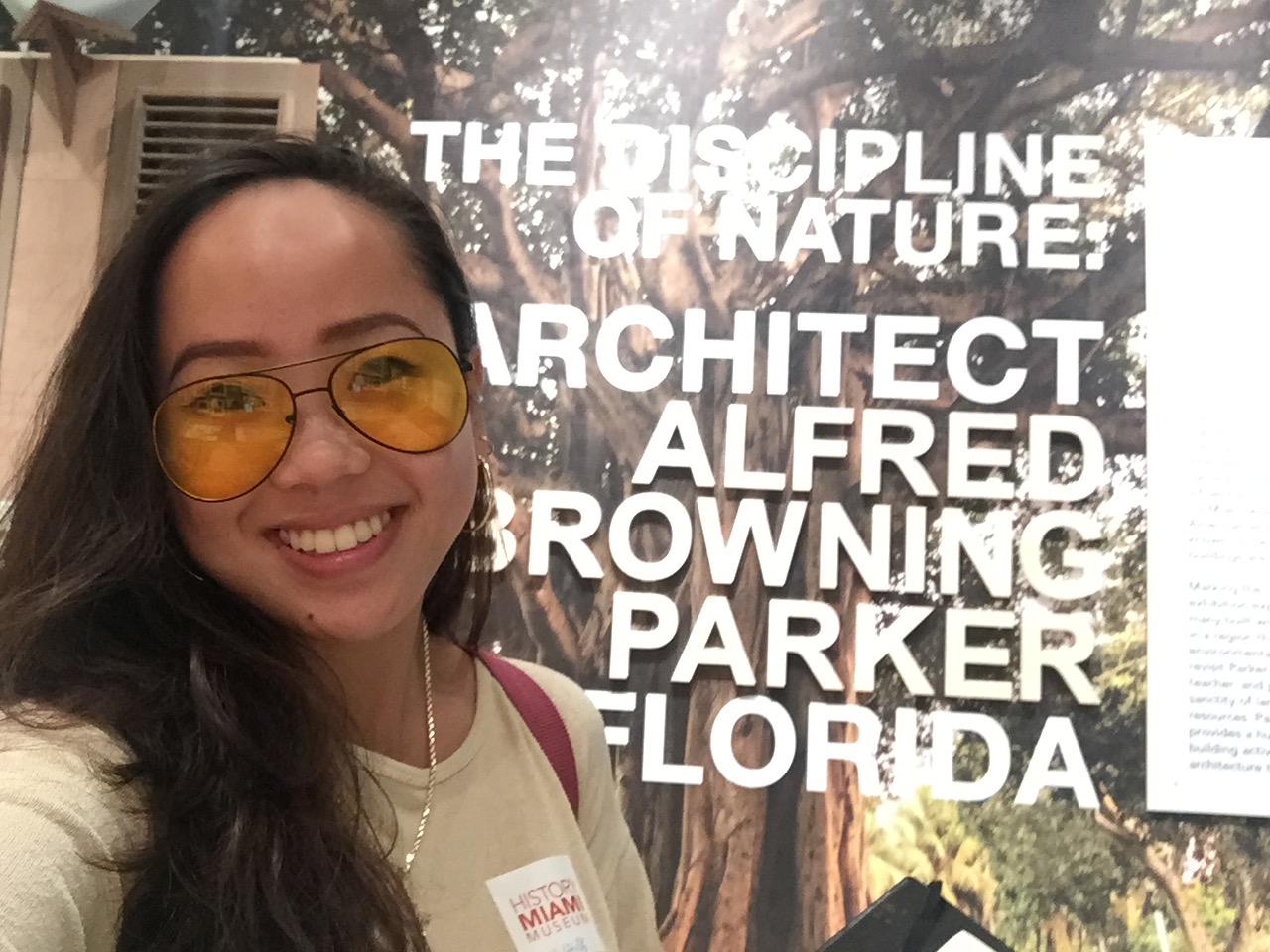
Response to The Discipline of Nature: Architect Alfred Browning Parker in Florida

     Upon finding out that Alfred Browning Parker was an environmentally conscious architect, I immediately thought of Frank Lloyd Wright. I later found out that Parker was indeed inspired by Wright's trailblazing "organic architecture" ideology (I am rather familiar with Wright's work because my high school was very close to Florida Southern College, home of the world's largest single-site collection of Wright's architecture.) From reading a small section in one of Parker's journals that were in display, I could tell that he is very consistent with his practice and it shows in his marvelous architectural feats. In one of his journals he noted, "Efficiency is largely a matter of concentration. Health is an important factor. Keep resiliency and energy. Excess energy". With a mindset like this,  Alfred Parker always stayed conscious about his surroundings and continued to incorporate it into his work throughout his long career.
     When looking at Alfred Parker's work, I noticed that the nature(plants, flowers, bodies of water) and man made buildings in his renderings are always unified in a natural way. In some/most of his drawn models and sketches, Parker illustrates each building in a whole landscape, and gives each of them an environment to coexist with. Even after reaching celebrity status, Parker continued to innovate knowing that he has gotten to a point where he can continue his practice on a national level.
Adobe Villas

Caribbean Projects

Belin Residence #2, Coconut Grove, 2059


World Trade Center Project


Wednesday, October 26, 2016

The Street/ "a SoFlo afternoon"

During critique my peers identified that my color usage to convey mood was a strength; I plan on using color to convey mood for The Garden as well.


Research of Images for List on Board

*Buckminster Fuller: an American architect, worked from late 1920s to 70s.

* Ha-has: Can be found in formal gardens, grounds of grand estates.

*Parco dei Mostri: Located in Bomarzo in the province of Viterbo, in Northern Lazio, Italy. Created during the 16th century.
*Roman Forum: Originally a market place in Ancient Rome, built by  multiple emperors(from emperor Julian to Trajan), Started being built in 29 BC.
*Boboli Gardens: Located in Florence, Italy. It's construction began in 18th century.

*Jardin du Luxembourg: Located in Paris, France and built in 1612 as a commission for Marie de' Medici.

*Tivoli Garden or Villa de'Este: An Italian Renaissance garden in Tivoli, Italy, made during the 16th century.


*Bernini's Four Rivers: Designed in 1651 by Bernini and Pope Innocent X. This fountain is located in  Piazza Navona, Roma, Italy. 

* Jean Dubuffet's Jardin d'E maille: Made in 1974 and is currently in the Rijksmuseum, Netherlands.
*Stowe Garden: An 18th century garden located in  Stowe, Buckinghamshire, England.
*Stourhead Garden: An 18th century garden located in Mere, Wiltshire, England.
* Lincoln Memorial: This national monument is located in the National Mall, Washington D.C and was in construction from 1914 to 1922.
*Viscaya Museum: Named after early Spaniard " Bel Viscera". This villa belonged to James Deering, a business man, and served as his winter residence. It was in construction from 1914 to 1923.
*Fairchild Tropical Gardens: Established in 1936 by Robert H. Montgomery. He named the garden after his friend, David Fairchild ( who retired in Miami).

Sunday, October 23, 2016

Response to “Green Dreams”

    This text is laden with historical references and allusions; I found myself having to look up a lot of what Harbison was referring to as I tried to decipher the reading. All of the extra research was tedious but I was determined to get as much as I can out of the reading and I actually found the new bits of knowledge to be rather rewarding. I've learned that a garden can carry a powerful monologue, it can be an intellectual space that can possess a plethora of symbolism.
     Two things really stuck to me from this passage: Harbison's allusion to Piranesi and Raphael's artwork in context with this "garden" topic. I've actually never heard of Piranesi before and discovering his work through this text was a real treat. There is a certain atmosphere that Piranesi manages to create in each of his elaborately rendered etchings and I can't stop studying the details in them ( I can see MC Escher possible drawing inspiration from Piranesi's Imaginary Prisons.) The comparison between the Stourhead temple and the one in Raphael's Marriage of the Virgin helped me understand how a building can bring "higher meanings" to their surroundings, in this case, a Renaissance painting and an English garden.
Carceri d'invenzione or Imaginary Prisons
Piranesi

Marriage of the Virgin
Raphael
Temple of Apollo, Stourhead


Wednesday, August 24, 2016

Labels Help You Organize
All blog posts must be labeled with two keywords, which blogger calls Labels. When faculty visits your blog for evaluation purposes, we will use the labels to quickly find your work. If you do not use the keywords properly, we will not be able to find your work. Proper set-up and maintenance of your blog falls under the Research and Participation part of your grade which counts for 30% of the overall semester grade. 

Topical Keywords
The first set of keywords correspond to the module we are working in. We will refer to these as topical keywords since they correspond to the topic we are exploring over the two-week periods. Your first group of posts will be labeled under Topic: Creative Impulse since this is the first topic (Topic #1). Here are the topical keywords you will use through out the semester:

Topic: Creative Impulse
Topic: Pattern and Ornament
Topic: Rhinoceros
Topic: Narrative
Topic: Landscape
Topic: Zine

Categorical Keywords
The second set of keywords will organize your posts according to kind. Here are the Keywords you will use for Labels:

Exercises - tag for posts documenting all assigned exercises. The first one will be the paper folding exercise from the first class. 

Readings - tag for posts containing your two paragraph responses to the assigned readings. The first ones will be for "The White Bird" and the Jerry Saltz article from Vulture.com. 

Small Works - tag for posts documenting all assigned small works. The first blog post labeled Small Works will contain images and accompanying descriptions of the three small works you complete for the Creative Impulse Module (Topic #1). 

In-Depth Projects - tag for posts documenting all assigned In-Depth projects. The first blog post labeled In-Depth Projects will contain images (or video if appropriate) and accompanying descriptions of the more robust work you produce in response to the Creative Impulse Module (Topic #1).

Outside Visits - tag for posts containing your two paragraph responses to all required visits outside of the classroom. These include visits we do together as a class [during class time] or individually outside of class time. 

Please be sure to use both a topical and categorical keyword when labeling your posts.

Next Steps
1. After copying and pasting this text into your first blog post, create your labels from the keywords we listed above. In the Edit post window you will find an area titles Labels where you can add your own custom labels to your blog. This is where you will add the keywords we listed above. Please be sure to add all keywords to the Labels window for this first blog post. 

The easiest way to do this is by copying and pasting the following text into the Labels window for this blog post:

Topic: Creative ImpulseTopic: Pattern and Ornament, Topic: Rhinoceros, Topic: Narrative, Topic: Landscape, Topic: Zine, Exercises, Readings, Small Works, In-Depth Projects, Outside Visits