Alexander Rothman illustrates how one can go about reading comics poetry by proposing questions like "What are the effects of these choices and their repetition?" under some of the examples he gave; we must be aware of the "visual choices" of these works as we would be with any other works of art. Knowing this makes me think of Chris Ware as a true pioneer of this form of work. Chris Ware brought his bountiful knowledge of visual arts into his comics; when creating them he asked questions like "When you have all the tools of visual arts at your disposal, then why put words in balloons?". Ware also choses to avoid using perspective in his comics because to him it doesn't "effectively translates the way we remember physical space into the two-dimensional form of comics" (from an interview with The Paris Review). The introduction to this form of work really reinforces how important it is for us to stray from our habit to quickly consume information around us like we were shaped to but instead slow down and really try to understand works of art and as Rothman puts, "walk a mile or two in someone else's brain."
Saturday, November 5, 2016
Response to "What is Comics Poetry"
In this essay, Alexander Rothman gave me a pretty good idea of what comics poetry is. I have become more conscious of this form of work recently and have also began to see it manifest more and more around me; I've also noticed that this form of work has always intrigued me subconsciously but I never really knew how to approach it. My understanding is that poetry and comics are difficult to comprise on their own; this new form combines both mediums and I now realize how they can seem simple at a glance but are actually "exceptionally difficult" as Rothman stated. Now that I am recalling my encounters with comics poetry, the first thing that comes to my mind is Ida Applebroog's artists' books. I deeply appreciate the exposure to Ida Applebroog's books towards the beginning of WARP because I think it was one of those things that really helped me push my ability to be aware of this "subjective bridging" that occurs in art.

Miss Hokusai (movie)
If anyone wanted to watch the animated movie "Miss Hokusai" that was on the presentation for the Narrative: Telling Stories unit, I highly recommend it. It's a beautiful film, here's a link to watch: http://gogoanime.io/sarusuberi-miss-hokusai-episode-1
 |
| screen-cap from the movie |
Friday, November 4, 2016
In-Depth: City of Baucis
I chose to depict the city of Baucis from Italo Calvino's Invisible Cities. The final piece was done in oil, a medium I practiced using in my Street and Garden pieces.


The Garden
For this small work assignment I decided to visit Vizcaya because I've heard many great things about it. It was a windy overcast day and Vizcaya was tranquil space; I thoroughly enjoyed my time there. Towards the back of the garden I saw a piece of reflective mylar hanging among the vines. Its placement seemed intentional and caught my attention so I incorporated it into my final piece (it read more like flowing drapery in critique).


Sunday, October 30, 2016
Poetry: "The Garden"
Nguyen Vu
The Garden
Winds blowing, pushing the surface
of the crystal clear pool,
I went to the renaissance-styled garden,
where the scent of the ocean
and the billowing gray clouds
cloaked the manicured terrain.
The structures of marble, and stone
stand sturdy; the sun raises
the green luscious vines.
The carved angels frolic about
in white, loveliness flaunting. Along the paths
the palms danced--
ethereal beings, lightening the landscape.
Through the storms, subsequent delicacies
will remain.
Friday, October 28, 2016
Response to Visionary Metropolis: Tony Garnier's Une Cité Industrielle
The amount of work that Tony Garnier has produced for Une Cité Industrielle shows how obsessive he is about bringing this idea of a modern city, that was planned to be virtually utopian, to life. Considering what the citizens of this city would want, Garnier depicted every single intricate detail in the architectural floor plan and also in the specific sketches of different areas of the city (residential zones, industrial zones etc.) I must admit at first glance his renderings do just seem like pretty architectural illustrations but as I looked closer the small texts revealed that in creating this ideal metropolis, Garnier was considering the needs of every individual that would live in this society.
Not only did Garnier and his peers create proposals for a "greener" society, they also brought to light the flaws of industrialization. In Pierre Paulus' piece The Industrial Region, the portrayal of the smog billowing out of the factory chimneys caused me to almost smell the toxic fumes. I can not begin to imagine what life was like to for people like Tony Garnier during the industrial revolution. Yes everything around you is advancing at a rapid rate and society is improving, but at what cost? Humans were beginning to be less and less considerate of environmental degradation that was also occurring and that drove Garnier (and many other "designers and reformers") to propose a change for the better. To me, Une Cité Industrielle is a fine example of how one person was able to process and synthesize the information around him and turned it into a proposal to revamp society.
Not only did Garnier and his peers create proposals for a "greener" society, they also brought to light the flaws of industrialization. In Pierre Paulus' piece The Industrial Region, the portrayal of the smog billowing out of the factory chimneys caused me to almost smell the toxic fumes. I can not begin to imagine what life was like to for people like Tony Garnier during the industrial revolution. Yes everything around you is advancing at a rapid rate and society is improving, but at what cost? Humans were beginning to be less and less considerate of environmental degradation that was also occurring and that drove Garnier (and many other "designers and reformers") to propose a change for the better. To me, Une Cité Industrielle is a fine example of how one person was able to process and synthesize the information around him and turned it into a proposal to revamp society.
 |
| Une Cité Industrielle |
  |
| Plate 123, Habitation [Dwelling], from Une Cité Industrielle, 1917 |
 |
| Poster, Le pays industriel, De nijverheidsstreek [The Industrial Region], 1911 Pierre Paulus Chromolithograph |
Response to The Discipline of Nature: Architect Alfred Browning Parker in Florida
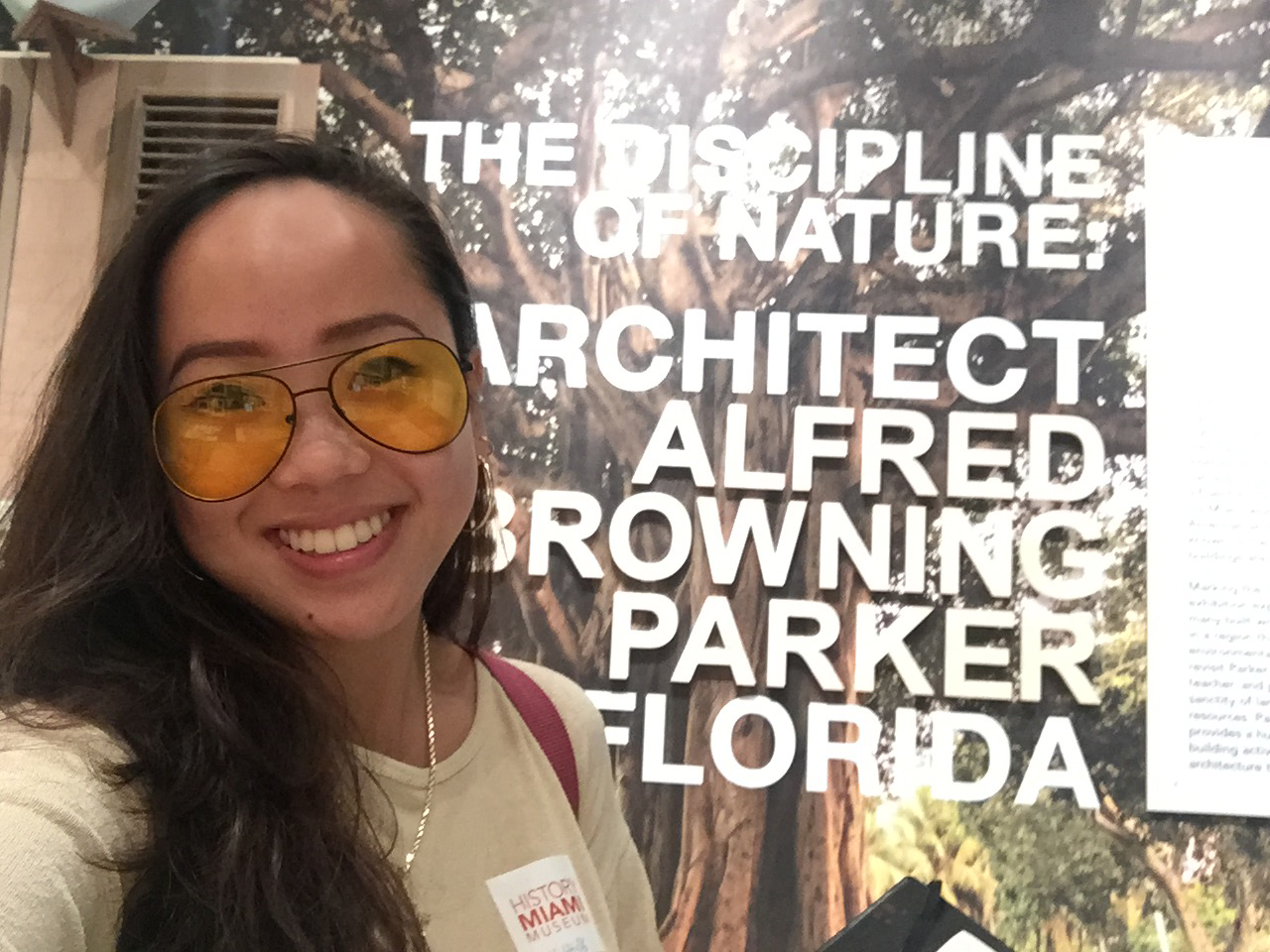 Upon finding out that Alfred Browning Parker was an environmentally conscious architect, I immediately thought of Frank Lloyd Wright. I later found out that Parker was indeed inspired by Wright's trailblazing "organic architecture" ideology (I am rather familiar with Wright's work because my high school was very close to Florida Southern College, home of the world's largest single-site collection of Wright's architecture.) From reading a small section in one of Parker's journals that were in display, I could tell that he is very consistent with his practice and it shows in his marvelous architectural feats. In one of his journals he noted, "Efficiency is largely a matter of concentration. Health is an important factor. Keep resiliency and energy. Excess energy". With a mindset like this, Alfred Parker always stayed conscious about his surroundings and continued to incorporate it into his work throughout his long career.
When looking at Alfred Parker's work, I noticed that the nature(plants, flowers, bodies of water) and man made buildings in his renderings are always unified in a natural way. In some/most of his drawn models and sketches, Parker illustrates each building in a whole landscape, and gives each of them an environment to coexist with. Even after reaching celebrity status, Parker continued to innovate knowing that he has gotten to a point where he can continue his practice on a national level.
 |
| Adobe Villas |
 |
| Caribbean Projects |
 |
| Belin Residence #2, Coconut Grove, 2059 |
 |
| World Trade Center Project |
Subscribe to:
Posts (Atom)